
Luoping, Yunnan, is located at the junction of Yunnan, Guangxi, and Guizhou provinces, and is renowned for its "three provinces within earshot". Outsiders are likely to have an impression of it as a place with hundreds of thousands of acres of rapeseed flowers, which can attract tens of thousands of tourists during the flowering season. What I want to talk about is one of the three yellows (small yellow ginger, rapeseed, and honey) in Luoping: small yellow ginger. Luoping County is located in the southeastern part of the eastern Yunnan Plateau, with a mild and humid climate, evenly distributed rainfall, sandy soil, and rivers belonging to the Pearl River system. There are eight major rivers passing through the county. The unique geographical location and climate have enabled the cultivation of small yellow ginger with high oil content, further contributing to its reputation as the "hometown of ginger".
The cultivation of small yellow ginger in Luoping County dates back to the Tang Dynasty, as documented in the "Luoping Prefecture Annals". By the 21st year of the Republic of China (1932), the "Luoping County Annals" provided a more detailed record, ranking it at the top of vegetables. It is used both as medicine and food. In 1958, it even became a popular export product. By 2009, Luoping small yellow ginger was listed in the "China Geographical Indication Protection List" and has long become a well-known product in Yunnan.
The certified organic ginger, grown without pollution, pesticide residues, or excessive heavy metal content, is sufficient to attract modern people's pursuit of green and healthy food. The current planting area has reached 170,000 mu.
Luo Ping's small yellow ginger belongs to the Zingiberaceae family and is one of the small-sized ginger varieties. It is not the ginger we commonly use in cooking. Due to its strong aroma, tender flesh, minimal fiber, bright yellow color, rich spicy flavor, and high nutritional value, its taste and medicinal efficacy surpass that of large-sized ginger, making it an outstanding representative among small yellow gingers.
November is the season for ginger harvesting, where both old and fresh ginger are gathered. The fresh ginger with good color and texture is repeatedly cleaned with spring water flowing through the area, then dried in the sun, and finally dried using infrared technology until the moisture content in the ginger reaches 6% to 8%. At this point, its gingerol content is higher than that of ginger dried at higher temperatures or with hot air.
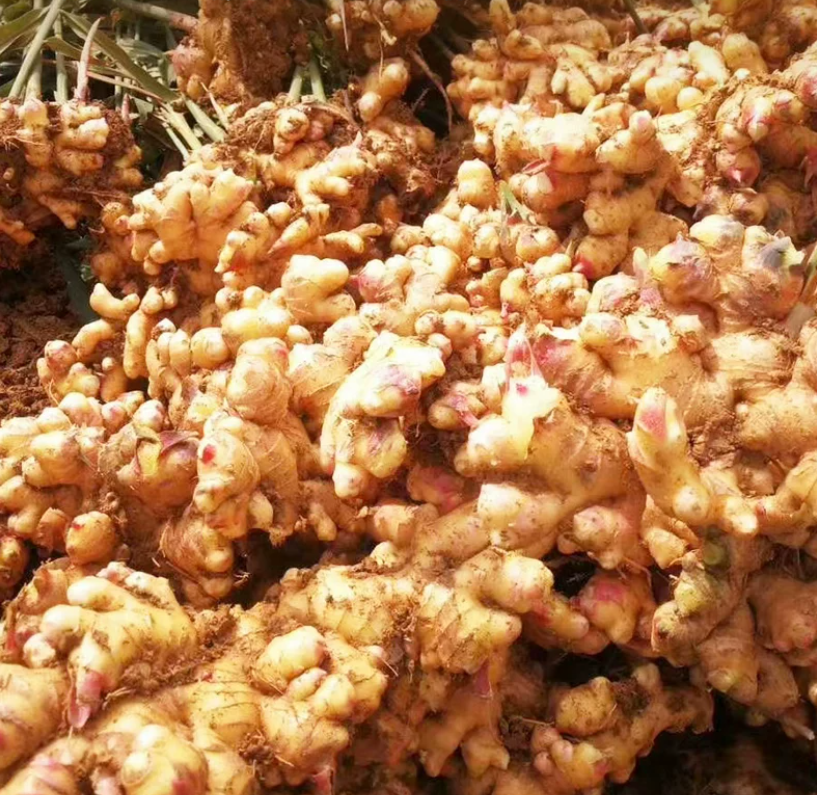
Gingerol, the primary bioactive substance in ginger, exhibits a wide range of biological activities, including lipid-lowering, antioxidant, anti-ulcer, anti-tumor, anti-inflammatory and analgesic, antiemetic and anti-nausea, bactericidal and preservative properties.
According to the "Chinese Materia Medica Dictionary," small yellow ginger is pungent and warm in nature, with a spicy, slightly sweet, and slightly bitter taste. It contains various amino acids such as glutamic acid, aspartic acid, and glycine. It has medicinal effects such as dispelling cold, resolving phlegm, stopping vomiting, treating cold and wind-cold, asthma and cough, diarrhea, and detoxifying Pinellia ternata, Pinellia pedatisecta, fish, crab, bird, and beast toxins.